

Summary (concise takeaway)
Distilled LLMs raise ethical and competitive concerns, while GPU/NPU compute defines production capability. Business availability remains a core operational requirement, and long‑term evolution toward IPO depends on sustained innovation, governance, and market trust.
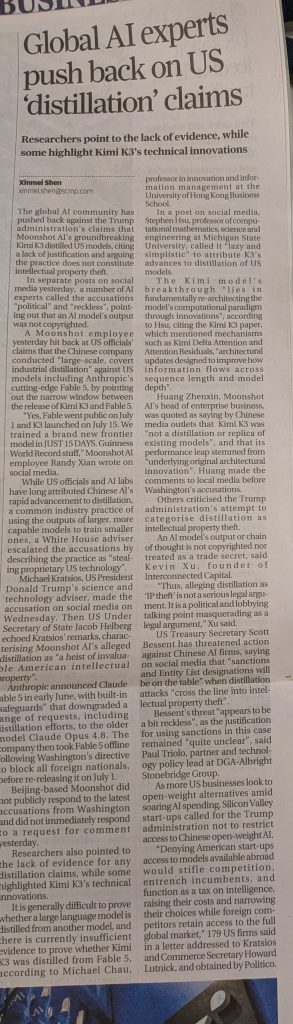
The debate around distilled LLMs has intensified as global AI ecosystems mature. Distillation—compressing a large model’s capabilities into a smaller one—can be a legitimate optimization technique. However, when distillation is used to replicate proprietary frontier models without authorization, it becomes a form of cheating. It bypasses the years of research, massive compute budgets, and intellectual property that original developers invested. In competitive markets, especially where national security and corporate advantage intersect, unauthorized distillation undermines trust and destabilizes the incentive structure that drives innovation. The core issue is not the technique itself but the intent and transparency behind its use. Ethical AI development requires clear provenance, auditable training pipelines, and respect for IP boundaries.
At the same time, the foundation of modern AI production lies in GPU and NPU compute. GPUs remain the backbone of large‑scale training due to their parallelism and mature software ecosystems. NPUs, meanwhile, represent the next evolution—specialized accelerators optimized for inference, edge deployment, and energy‑efficient workloads. Together, they form the industrial machinery of AI. Companies with access to high‑performance compute can iterate faster, train larger models, and deploy more sophisticated systems. Compute is not merely a technical resource; it is a strategic asset that determines who can participate in frontier‑level innovation. In this sense, GPUs and NPUs are the “production power plants” of the AI economy.
Despite the complexity of AI development, availability remains business as usual. Enterprises expect uptime, reliability, and predictable performance. Whether a model is distilled, trained from scratch, or built on hybrid architectures, customers care about stability and service continuity. Availability is the operational layer that transforms research into revenue. Companies that fail to deliver consistent access lose trust quickly, especially in mission‑critical environments such as finance, logistics, and healthcare. Thus, operational excellence becomes just as important as technical breakthroughs.
Looking ahead, the long‑term evolution toward IPO for AI companies depends on several intertwined factors. First, they must demonstrate defensible technology—either through proprietary architectures, unique datasets, or specialized compute strategies. Second, governance and compliance frameworks must be robust, especially as global scrutiny around AI ethics, IP rights, and geopolitical risk intensifies. Third, sustainable revenue models are essential. Frontier AI is expensive to build and maintain; investors want proof that a company can convert innovation into recurring income. Finally, public market readiness requires narrative clarity: a company must articulate how its technology will shape the future and why it will remain competitive over the next decade.
In conclusion, the AI industry sits at a crossroads. Distillation controversies highlight the need for ethical boundaries. Compute power defines who can innovate. Availability ensures business continuity. And long‑term evolution toward IPO demands strategic discipline. Companies that balance these forces will shape the next era of global AI leadership.