

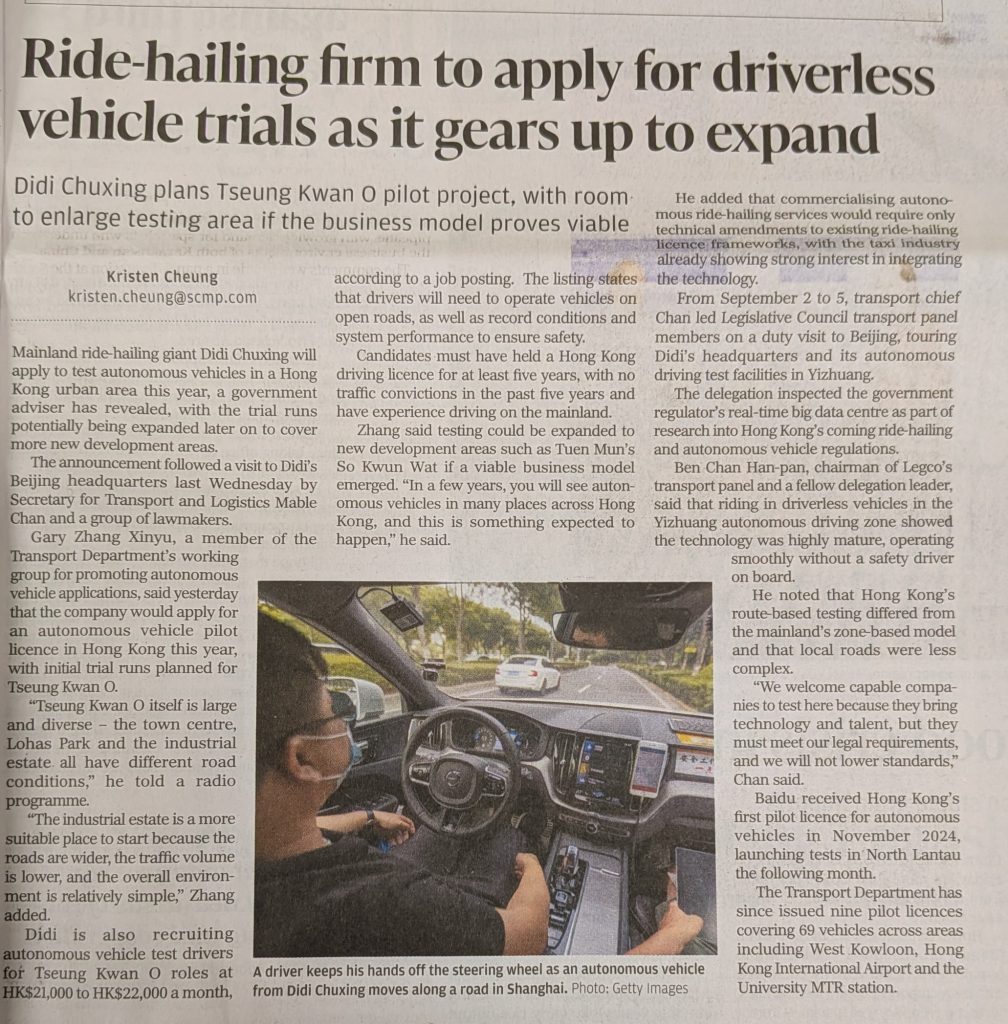
1. Invitation of Foreign EVsTo position itself as a globally competitive hub for autonomous electric vehicles (EVs), the market must actively invite international auto manufacturers and technology developers alongside mainland giants like Didi and Baidu. Diversifying trial participation ensures compatibility across various international engineering standards and driving software. Global partnerships bring cutting-edge hardware, cross-border data insights, and international investment, creating an inclusive ecosystem rather than relying solely on domestic solutions.2. Reviewing Rules for Auto EV InnovationPioneering driverless technology requires modernizing flexible regulatory frameworks. Current licensing systems should shift from restrictive, zone-specific trials toward adaptive, route-based testing models across complex urban environments. Updating safety compliance, accident-handling protocols, and commercial ride-hailing frameworks enables faster deployment while safeguarding public safety. Flexible regulatory sandboxes allow developers to safely test edge cases, refine autonomous driving systems, and smoothly transition pilot projects into scalable commercial operations.3. Increasing Labor Intensity in AI and Physical AI InnovationAutonomous driving relies heavily on Physical AI—the integration of artificial intelligence with real-world physical systems—which creates specialized, high-value employment rather than simply eliminating traditional jobs. Testing and deploying autonomous fleets require safety backup drivers, remote control center operators, AI system trainers, field technicians, and data collection specialists. Expanding these labor-intensive operations builds a highly skilled workforce essential for maintaining, monitoring, and scaling embodied AI technologies across modern urban transport networks.