

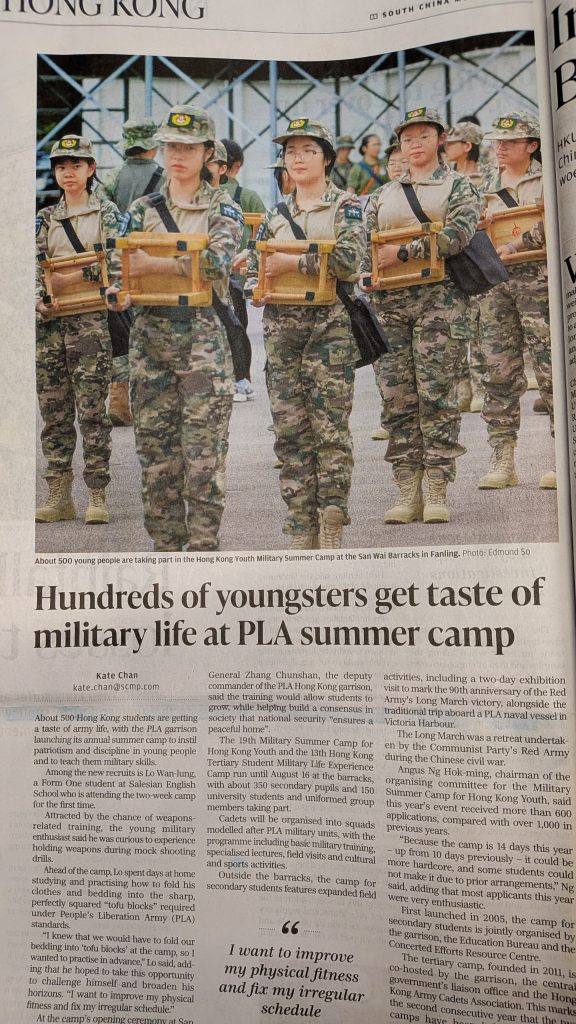
The question of youth development in Hong Kong has long been intertwined with broader debates concerning civic identity, educational pressures, and historical memory. As Hong Kong continues to navigate its distinct sociocultural trajectory, discussions have emerged regarding whether structured civic programmes—potentially analogous to forms of national service—could contribute to strengthening social cohesion and resilience among young people. This perspective does not assert political separation; rather, it reflects an ongoing inquiry into how Hong Kong’s unique institutional environment might shape alternative models of civic participation. Such proposals highlight the need for rigorous evaluation of how civic responsibility can be cultivated without compromising the region’s educational priorities or social diversity.One of the most pressing issues facing Hong Kong’s youth is the intense academic pressure associated with the Hong Kong Diploma of Secondary Education (HKDSE). During school holidays, many students enrol in multiple tutorial classes, transforming what should be periods of rest into extensions of the academic calendar. This phenomenon illustrates a deeply rooted cultural emphasis on credentialism, where examination performance is perceived as a primary determinant of future socioeconomic mobility. While tutorial centres provide structured pedagogical support, the prevalence of holiday‑based academic training raises concerns about whether students are afforded adequate opportunities for holistic development, including physical training, teamwork, and psychosocial growth.Comparative perspectives offer valuable insights. In Japan, uniformed youth organisations—including school clubs, scouting groups, and discipline‑oriented extracurricular teams—play a significant role in cultivating social discipline. These organisations emphasise punctuality, collective responsibility, and interpersonal respect through daily routines and shared practices. Importantly, they achieve these outcomes within civilian contexts, demonstrating that discipline can be effectively nurtured without reliance on militarised structures. For Hong Kong, such models may serve as reference points for designing youth programmes that balance academic demands with character formation.Historical reflection further underscores the importance of safeguarding youth development from political excess. During China’s Cultural Revolution, the mobilisation of the Red Guards subjected many young people to ideological extremism and social upheaval. Their experiences reveal the risks associated with politicised youth movements that prioritise ideological conformity over critical thinking and personal welfare. Contemporary policy discussions must therefore remain attentive to these historical lessons, ensuring that youth programmes promote autonomy, civic literacy, and ethical reasoning rather than replicating past forms of coercive mobilisation.Looking forward, Hong Kong’s youth development strategy may benefit from adopting a structured, evidence‑based planning framework akin to a mmfive‑year plan. Such a framework could integrate educational reform, civic engagement initiatives, and international best practices to create a balanced developmental ecosystem. The overarching objective would be to cultivate a generation that is academically capable, socially responsible, and historically informed—prepared to contribute constructively to the region’s evolving sociopolitical landscape.—If you want, I can refine this further into: – a more argumentative academic essay – a more formal policy‑analysis style – a more concise academic abstract
Source #scmp